Need quick, convincing gore? Elevate your Make-up with this hyper-realistic film-grade Prosthetic of a beaten and swollen eye. Whether you're a seasoned MUA or gearing up for your first Halloween contest, these pieces guarantee a chillingly realistic transformation.
Engineered for the demands of film and television, this silicone prosthetic delivers hyper-realistic texture and unparalleled durability. Moulded from the highest-grade, platinum-cure silicone, it flexes and moves with the skin, blending seamlessly under high-definition cameras.
Key Features:
Ultra-Realistic Detail: Hand-sculpted and moulded to capture the minute details.
Encapsulated Edges: Features micro-thin, blending edges encapsulated in either Baldiez or Super Baldiez, making application fast, easy, and virtually invisible.
Flexible & Durable: Made with soft, medical-grade silicone that resists tearing, allowing for a full range of facial movement and ensuring it lasts through long shooting days.If you are a beginner, I recommend also purchasing my Blood and Glue pots accompanied with my Application and removal guide, to help you explore the world of gore with ease!
There are multiple shades available for you to choose at checkout, and the option to have either Acetone-based or IPA-based Cap-plastic, although industry standard is Acetone so you can pre-paint your pieces before application.
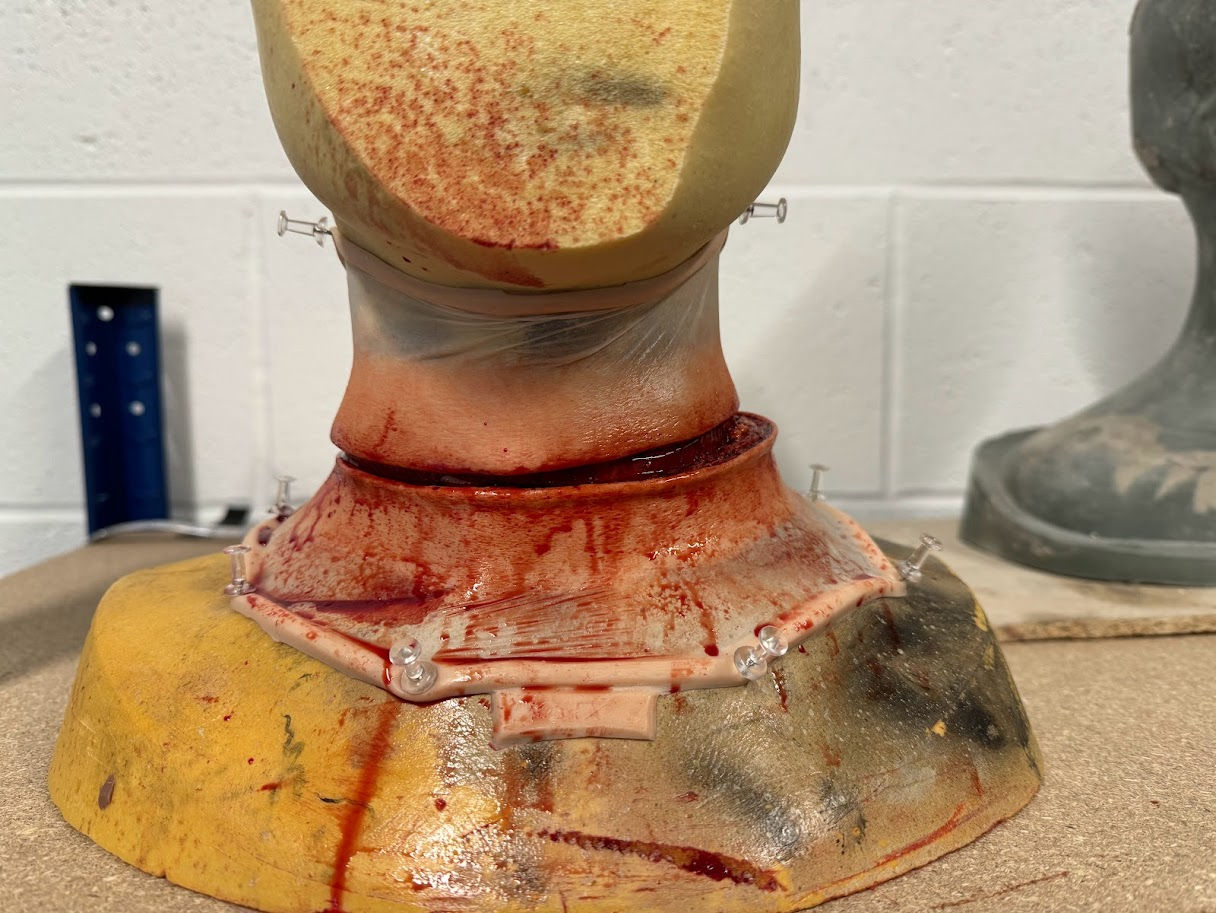
Silicone Prosthetic : Decapitated Neck Slice | SFX Makeup | Halloween
Step 1:
Ensure the skin is clean and prepped before application, using products such as IPA for cleaning and Derma Shield for prep. Make sure the skin is dry before applying glue.
Step 2:
Depending on your adhesive of choice, apply a thin layer of adhesive to both the skin and the back of the prosthetic, unless you are using a silicone adhesive such as Sil-Key where you can just apply to the skin, and let them both go dry/clear/tacky.
Step 3:
When you are happy with the position, gently apply the piece to the desired position, focusing on the middle section and working outwards, and smoothing it down to the edges. It can help to do this with a sponge or soft brush to get the cap plastic nice and smooth on the skin without any wrinkling.
Step 4:
Using a brush or cotton bud dipped in acetone, gently soak around the edge of the flashing (silicone border around the prosthetic). Gently blend the edge of the thin plastic and dissolve the edge against the skin and make it disappear!
Step 5:
If you are struggling to hide an edge, we advise adding a stippled layer of prosaide around the edge and let it dry. You can then dust this with some powder to seal it before painting.
Step 6:
Once the edges are dissolved and blended onto the skin, add another layer of loose powder to get rid of any tacky adhesive. Now you are ready to paint your prosthetic! You can use alcohol activated paints, water based paints, grease/oil based paints or even regular make up. Once you have finished painting you use a setting spray to seal the application.
To remove the prosthetic, I would recommend using a product like 'Bond-off' which is gentle on the skin, using either a brush or a cotton bud, gently work in circular motions around one of the edges until the edge begins to lift. Once the edge of the cap plastic has started to lift you can gently lift and get the brush/cotton bud underneath the prosthetic, continuing with circular motions until the piece has come clean off. Once prosthetic has been removed go over the area with a cotton pad and your remover to get any remaining adhesive off the skin

